Read Books This will provide a list of the books I've read with a brief review. Users are blocked, contact me for access. I welcome discussions, but I'm tired of spam.

February 22, 2014

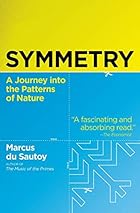
Symmetry: A Journey into the Patterns of Nature by Marcus du Sautoy

Filed under: Art,History — Randolph @ 7:55 pm

Symmetry: A Journey into the Patterns of Nature
by Marcus du Sautoy

Symmetry has two points of focus. One is the symmetry in nature and its relationship to mathematics. Second is the history of mathematical symmetry and the people behind the exploration.

The mathematics is expressed in simple terms, the only equations are simple that anyone can recognize, a few diagrams, and the digits of large numbers. Much is in the descriptions of bizarre objects in muti-, as in more than 20, dimensional space. The author describes them in terms of their numbers of symmetry, no imagery is required.

The main issues with the book are it can be redundant and slow. I felt some of the historical stories on people should have been left out or shortened.

On the positive side, it flows well and is easy to read. It does a good job of tying different areas of math together, and it does mention by name a few more complex topics as he covers them. I think the book would have done better by providing more math, since that was the focus of the book, it feels like an important part was omitted.

If you have an interest in math, you will probably find the book of interest. Otherwise I’d pass it up.

March 27, 2011

How Music Works by John Powell

Filed under: Art,Technical — Randolph @ 8:57 pm

How Music Works by John Powell
This book is a technical book about music, how it works and what it is.  It discusses the physics of music in very non-technical and easy-to-understand terms.  It also covers some of the history, and why things are the way they are.
According to the author, the target audience is everyone, whether a neophyte to music or an aficionado.  I disagree with this assessment.  I found the book interesting, but low in information density and primarily of use to those who haven’t studied much music.

The book does cover all the major details of music.  I also felt the author does a good job of making it understandable. Even though I have studied music, I felt John Powell helped me solidify my understanding of a number of topics.

John Powell also interjects his humor into the book, making it more palatable for those who already know the information he is covering.  However, I felt he went overboard and could have used a lot less.  At times, it got rather old.

Due to the low density of information, the book is a fairly fast read without sacrificing the ability to retain information.

The book also includes a CD.  The CD contains sound tracks that compare different elements of music.  For instance, one of the tracks compares and discusses the sound from a guitar string played from different positions, focusing on the quality and timbre of the sound.  The CD is short, but has a few interesting elements to it.  You will probably listen to it once and forget about it.

If you don’t know much about music, this book would probably be a good place to start.  Otherwise, I don’t think it provides much value.

May 14, 2010

Reading Like a Writer: A Guide for People Who Love Books and for Those Who Want to Write Them by Francine Prose

Filed under: Art — Randolph @ 3:57 pm

Reading Like a Writer: A Guide for People Who Love Books and for Those Who Want to Write Them by Francine ProseReading Like a Writer is a description of writing. It focuses on the use of the word in literature, and makes excellent use of examples for well-known books to illustrate her points. Francine Prose describes the strengths of her selected passages and why the wording is important.

The book is aimed at improving the readers ability to appreciate good literature. She discusses the nuances of word use, picking at the meaning of individual words, and what is not said and why that is important. She talks about the use of paragraphs, and how changing the paragraphing changes meaning of text. She shows how to derive meaning from what isn’t stated in the text, and makes me appreciate the effort that a quality writer goes to to get the words right.

After reading this work, I feel I have a new respect for literature. I’m eager to try to tackle some of the books she’s recommended.

March 4, 2010

Fast Sketching Techniques by David J. Rankin

Filed under: Art — Randolph @ 3:50 pm

Fast Sketching Techniques by David J. RankinFast Sketching Techniques provides technical instruction on how to sketch quickly without sacrificing a lot of quality.

What drew me to the book is the quality of the sketches. Although not of a high drawing quality, they are very good given the time constraint and working environment.

The books strengths are the step-by-step approach to the drawing subjects, compositional considerations, and clarity of instructions. The numerous drawings are nice and fit well with the material.

Unfortunately, the book doesn’t have enough material. The author is constantly repeating himself with only minor variations in subjects. He has a lot of anecdotal filler material that may be interesting, but doesn’t support the theme of the book. I felt like this was a good magazine article that was stretched out to sell as a book.

March 2, 2010

How Fiction Works by James Wood

Filed under: Art,Favorites — Randolph @ 3:49 pm

How Fiction Works by James WoodThis book provides discusses fiction and provides an analysis of the tools to make it effective.

James Wood talks primarily about the point of view and voice. He does a comparative analysis of different styles and makes frequent and effective use of examples. Throughout the book, he talks about the tension between the narrator and the characters, how the author can use time, character development and conversation, and on. He never completely leaves a topic, as he will remind us in later sections of those earlier elements and how they are being used in conjunction with the current topics.

The book provides a great deal of information, more than can easily be absorbed in its reading. I feel to book had given me new tools for the analysis of literature, and whetted my appetite for more information.

September 8, 2009

Printmaking in the Sun by Dan Welden

Filed under: Art — Randolph @ 11:21 am

Printmaking in the Sun by Dan WeldenThis is a great intro to printmaking as well as solar plates. It covers basics of press use, inks and paints, and safety. The focus of the book is on solar plates. It discusses differnet printing methods as well as different exposure methods, how to determine exposures, and touches on different plates types. The book has a lot of useful information at several levels and should end up on your bookshelf as a handy reference.

January 26, 2009

How to Talk About Books You Haven’t Read by Pierre Bayard

Filed under: Art,Humor,Philosophy — Randolph @ 4:24 pm

How to Talk About Books You Haven't Read by Pierre Bayard

January 25, 2009

The Rest Is Noise: Listening to the Twentieth Century Alex Ross

Filed under: Art,Favorites — Randolph @ 9:27 pm

The Rest is Noise: Listening to the 20th Century by Alex Ross

January 19, 2009

Jazz 101: A Complete Guide to Learning and Loving Jazz by John Szwed

Filed under: Art,Favorites — Randolph @ 4:23 pm

Jazz 101: A Complete Guide to Learning and Loving Jazz by John Szwed

December 8, 2008

Altered Surfaces: Using Acrylic Paints With Gels, Mediums, Grounds & Pastes by Chris Cozen

Filed under: Art — Randolph @ 4:19 pm

Altered Surfaces: Using Acrylic Paints With Gels, Mediums, Grounds & Pastes by Chris Cozen

« Newer PostsOlder Posts »

Powered by WordPress